

Not a Size 2? Luxury Fashion Finally Wants You - The New York Times |
- Not a Size 2? Luxury Fashion Finally Wants You - The New York Times
- Fashion’s Coronavirus ‘Patient Zero’ Speaks - The New York Times
- Bill Cunningham: A memorable fashion and street photographer - Martha's Vineyard Times
- Australian Fashion Brands Are Scooping Up International Shoppers - Forbes
| Not a Size 2? Luxury Fashion Finally Wants You - The New York Times Posted: 11 Mar 2020 03:50 PM PDT  Patrick Herning has a vision for the future of plus-size shopping. "Say you're in Nordstrom with your straight-size friend," he said, using the term for standard industry sizing. "She sees this Altuzarra blazer, and you can go to 11 Honoré for the same one: same brand, style, fabric, just a different size." That is his elevator pitch for 11 Honoré, the designer shopping site he founded in 2017 for sizes 12 and up. The company, based in Los Angeles, has helped labels like Diane von Furstenberg, Carolina Herrera and Rachel Comey venture for the first time into extended sizing. Some luxury labels on the site, including Henning, a tailoring line, and Baacal, a sustainably made line designed by Cynthia Vincent, were introduced exclusively as plus-size lines. Others, like Dyvna, from Shirley Cook, the founding chief executive of Proenza Schouler, make clothes up to size 18. And 11 Honoré isn't averse to making a splash to get noticed. In February, it threw a pre-New York Fashion Week dinner party in the West Village attended by a gaggle of plus-size models and influencers. This followed a runway show in September made up entirely of models size 12 and above, led by the actress Laverne Cox in Zac Posen. High fashion has, historically, not been a welcoming place for plus-size customers, even if Ashley Graham has made it to the cover of Vogue a few times. Culturally, women with bodies well outside the range of sample sizes were not embraced — Karl Lagerfeld, the Chanel designer, often made his ungenerous feelings about larger women known — and there were almost no places to buy well-made or fancy clothes, even if you had the money and the desire for them. Why invest in clothes if your body was considered undesirable, or when you were one successful diet away from the necessity of wearing them in the first place? "Plus-size women have never been told they could stay that way and invest in themselves as they are," said Lauren Chan, who started Henning last year. "Before this chapter, I was a plus-size model and a fashion news director at Glamour. I had these incredible colleagues wearing Miu Miu every day like they had that armor on, but my weight fluctuated, and I wore from size 12 to 20. I was in meeting in C-suites in Condé Nast wearing Forever 21." Henning blazers have a trim on the lining with a pep talk that reads: "Wear it like you mean it." "SINCE I WAS A PRETEEN, I was a size 14 and up," said Aidy Bryant, the "Shrill" star, "Saturday Night Live" player and a founder, with the costume designer Remy Pearce, of the plus-size line Pauline. "I feel like so much of my youth was going to the mall or stores with my friends and watching them shop and being like, 'I'll buy a hair clip.'" Ms. Bryant remembered a photo shoot during her "Saturday Night Live" debut season, with Kate McKinnon and Cecily Strong. "They had these unbelievable dresses, and then I got to my rack and there were two things on it and they were both from Macy's," she said. "I thought, something is not the same here. This isn't a system I get to be a part of at all, and that's hurtful. I can't stand beside them and enjoy the same thing. The breadth of choice is just not there." Couture customers can have access to designer clothing for the right price, and celebrities like Beanie Feldstein may get to wear a Miu Miu gown to the Oscars. Still, plenty of famous women whose bodies are above a sample size, including Leslie Jones and Melissa McCarthy, have spoken publicly about the difficulty of finding designers to dress them for the red carpet. There may be more plus options than ever — and some designers are nodding toward inclusivity by incorporating one or two plus-size models on the runway — but there is a very long way to go, as illustrated by the influencer Katie Sturino's "Make My Size" series on Instagram. In the series, Ms. Sturino, who wears a size 18, photographs herself in the dressing room struggling to fit into the largest size she can find from labels like Aritzia or Zimmerman or at Neiman Marcus in Hudson Yards, along with an open letter to the brand — and her nearly 500,000 followers — expressing her desire to spend money on their clothes. "I get that if you're starting a small collection, you may not be able to afford plus, but Zimmerman, Alice and Olivia, Tory Burch still don't do it," Ms. Sturino said. Her campaign has had its share of success stories, as when she did a "Make My Size" post on the Veronica Beard line. "They look like fashion girls," Ms. Sturino said, referring to the founding sisters-in-law, Veronica Swanson Beard and Veronica Miele Beard. "I didn't think they would care or want to dress me, but they reached out and said it was something they were working on and thinking about. We went to lunch the next week." "Tanya Taylor is another one," she said. Both lines have extended sizing. The misstep that some designers make, Ms. Sturino said, is to offer only basics to their plus-size customers. "I don't want another $19 pair of jeans," she said. "A plus-size woman can buy black pants. The misstep that brands take is: 'Oh these women don't want to wear color.'" MR. HERNING IS FOND OF SAYING that more than half of the United States population is the 11 Honoré audience — as of 2018, it was estimated that 68 percent of American women are size 14 or larger, according to Plunkett Research — but it is one that he, as a slim man, had not paid attention to until a few years ago. He worked in fashion and event marketing with clients like Louis Vuitton and the Italian label Marina Rinaldi, which is owned by the Max Mara Fashion Group and has long been one of the few plus-size luxury lines. "The idea for 11 Honoré was planted in 2016 when I worked on a project for Marina Rinaldi," Mr. Herning said. "It is how I got to meet this customer, and I saw this underrepresented audience and an opportunity to dress a younger demographic." Clothing lines have long used the excuse that extending their size range is expensive, often citing the difficulty of developing new patterns. Anticipating those issues, 11 Honoré offers its own resources and expertise in pattern development or simply in helping a label to decide where to start. Diane von Furstenberg, for example, started with the signature wrap dress in three prints. 11 Honoré declined to divulge revenue figures. In November 2019, it secured $10 million in funding led by investors including Nordstrom and the venture capital firm Greycroft. Dana Settle, a founding partner of Greycroft, has known Mr. Herning since he worked in marketing. "He came to me very early on with the concept," she said. "I thought it was interesting and told him to do some homework and come back." When he came back to her, she realized, she said, that "this is a market that was really not understood, and completely underserved." Mr. Herning wants to open retail stores, though the company has showrooms in New York, Los Angeles, Atlanta, Boston, Chicago and Dubai where customers can shop in person. Later this year, it is introducing a private label. "Great pants, pencil skirts, button up shirts, jeans," Mr. Herning said. "I don't like using the word 'basic.' It's to complement investment pieces. The inspiration is the Row." Right now he has two wishes. One is for brands that offer limited sizing on 11 Honoré, including Ganni (up to size 14) and Dolce & Gabbana (up to an 18 that runs small), to expand to size 24. The other is for new brands to come into the fold: Gucci, Dries Van Noten, Stella McCartney. Mr. Herning wouldn't name brands he has approached that don't want to venture into plus. "More than 70 percent have changed their minds," he said. "I have yet to put a brand out there because so many have come back to me."  |
| Fashion’s Coronavirus ‘Patient Zero’ Speaks - The New York Times Posted: 11 Mar 2020 01:39 PM PDT  Just over a week ago, Michael Burke, the chief executive of Louis Vuitton, stood in the darkened space in Paris where his show — the last of fashion month — was about to take place and noted that, despite all the anxiety over the new coronavirus, there had been very few cancellations. He pointed out that many of the hundreds of people in the room had been traveling together and in enclosed spaces for weeks. "Do you know anyone who is sick?" he asked rhetorically. Everyone looked around and shrugged. But Mr. Burke didn't know that earlier that day, in a doctor's office in another country, Nga Nguyen had coughed. Ms. Nguyen, 27, is, effectively, fashion's patient zero. She was a guest at the Gucci show in Milan and the Saint Laurent show in Paris, two of the ready-to-wear season's most popular, heavily attended events — and the first fashion world denizen to be identified publicly as testing positive for the new coronavirus. As such, she has become something of a lightning rod for fears about a fashion system that enforces both travel and togetherness for an extended period of time, as well as a symbol of privilege and its carelessness. After that cough, which took place during a routine visit to a doctor with a family member, she was tested and the next day was told she was positive. Since then, she has been treated in a hospital in Europe, tracing her movements and trying to think of everyone with whom she may have been in contact. And she has been pilloried in social media and the press, along with her sister, Nguyen Hong Nhung, who attended both shows with her and has also tested positive for coronavirus. Ms. Nhung, who lives in Hanoi, Vietnam, has been called a "super-spreader" by British newspapers. Generally speaking, the implication was that they were jet-setting around the world spreading the virus and deserve whatever is coming to them. "People said I flew home, that I already knew when I was at the shows — neither of which is true — that I am spoiled, that because I showed my cleavage in one picture, that's why the virus was attracted to me, that it's time for greedy fashion people to stop and think," Ms. Nguyen said in a phone interview. One woman wrote, "rather than 'influencer,' it seems she was an infector." Others did not bother to check the timeline of outbreak versus Ms. Nguyen's trip to Italy. It probably did not help that the world discovered that Ms. Nguyen and her sister had been at the shows when they posted pictures of themselves in full fashion regalia on their Instagram feeds. (Ms. Nguyen has deleted her account because of "messages that threatened both myself and my family," she said.) Ms. Nguyen, who moves between London, Germany and Hanoi, is the daughter of a steel magnate and has been called a "global nomad" by The Resident, an online platform based in London. She has a degree in political science from King's College, London, and worked for LVMH in the cosmetics and perfume division in Paris before joining her family office. She declined to call herself an "influencer," though she did say she "loved" fashion and attending charity events, documenting them for social media with a photographer. She twice attended the Met Gala, and has been photographed at various galas with such fashion world figures as Naomi Campbell, Anna Dello Russo, Jonathan Newhouse and Virgil Abloh, the designer of Off-White and Louis Vuitton men's wear. She fully subscribes to the filtered view of life often shown on social media. In doing so, she set herself up as a target. "I completely understand the extreme sentiment, given the world is in hysteria over this epidemic," Ms. Nguyen said. "There's definitely major scrutiny for us, but I think it's largely based on assumptions and fantasization of the sequence of events." Here is what happened. Though Ms. Nguyen said she had been "a friend of" Gucci for a while, and had attended different collections in Europe in the past, she had never been to a Gucci show until this year, when the brand invited her and a guest. She was very excited. She asked her sister to come to the show. Together they flew from London to Milan on Feb. 18 and went to Gucci. "My mind was blown, I was in awe," Ms. Nguyen said. They spent the night, went to the showroom the next day and then flew back to London. (Ms. Nguyen did not want to disclose where she had stayed or what airplane she had flown for fear of hurting their business.) She and her sister were in Italy, she said, for less than 48 hours. At the time, she said, "no one was talking about the virus." It wasn't until Feb. 20 that Italy's first coronavirus case was recorded in Lombardy. On Feb. 25, they took the Eurostar to Paris to attend Saint Laurent. At that point, Italy had been identified as a coronavirus epicenter but was not yet in lockdown. Later that week, her sister flew home. "We felt totally fine the whole time," Ms. Nguyen said. "I was going to the gym, going to work." On March 2, she went on a work trip. Then the cough happened, and the next day she learned she was infected. "I was really confused at first," Ms. Nguyen said. "You think, how and when did it happen?" She said she does not know, but she has been in confinement ever since. Her fever fluctuates between low grade and 102.5, and she often has bouts of coughing. Ms. Nguyen said she had alerted her contacts at Gucci and Saint Laurent, as well as her friends, family, makeup artist and photographer. (None have shown signs.) She said both companies told her that their employees had shown no signs of Covid-19 and that they would inform people who had been seated near her. When contacted directly, Saint Laurent declined to comment further, citing privacy concerns. A spokesperson for Gucci emailed: "Despite 21 days having passed since our show, once we were informed of Mrs. Nguyen's coronavirus confirmation, we informed all guests that were seated alongside Mrs. Nguyen at the show. They have expressed their thanks and advised they are doing well." Now she is hoping that her next tests, on Monday, reveal her to be virus free, though she is also planning to stay in the hospital for retesting to be sure. She is aware of the disparity between her own status and ability to handle the requirements of quarantine and that of someone in a less cosseted position. As for social media, she is trying to stay off it for the moment. "Once I'm transitioning back to normal life after the recovery, I will bring it back," she said. At the same time, the fashion rumor mill continues to churn. Thoughts have turned to the Met Gala, the next big congregation of the industry and its acolytes, scheduled to take place May 4. The museum has said it has no plans to postpone. For the moment. Ms. Nguyen is not planning to attend.  |
| Bill Cunningham: A memorable fashion and street photographer - Martha's Vineyard Times Posted: 11 Mar 2020 11:06 AM PDT The documentary "The Times of Bill Cunningham" arrives at the M.V. Film Center on Friday, March 13. The late Cunningham built a career as a fashion photographer over 60 years, many of them at The New York Times. A shy, unassuming man, Cunningham was born in Boston. He moved to New York in 1949 and began his professional life there as a milliner for the department store Bonwit Teller. He had made his first hats as a 10-year-old. Working in the department store's advertising department, he was fired for making fancy hats for fancy balls. Cunningham started to move up in the fashion world in the 1950s after the editor of Women's Wear Daily interviewed him. For 50 years, he made his home in a room at Carnegie Hall. While in the Army in France, he took two weeks off to see the fashion shows in Paris. The year was 1952, and it was the beginning of a long-time association with the designer world there. Photographer Harold Chapman in Paris became his biggest influence. Thanks to another milliner, Cunningham made hats in Rochefort, France, and became associated with Sophie Bernard and Chez Ninon, major influences. Despite his connections to the world of high fashion and designers like Balenciaga and Jacques Fath, Cunningham bought his clothes at thrift shops for 50 cents and wore hand-me-downs from his well-to-do customers. In 1963, he dyed a suit black for Jackie Kennedy to wear at JFK's funeral. Cunningham was never interested in Hollywood, believing that movie stars lacked style in their personal lives. His first foray into newspapering came about from Women's Wear Daily editor John Fairchild, who felt fashion was not a profession for men. Cunningham acquired a camera in 1967, using an Olympus half-frame. Cameras came as a revelation, and he began taking many photographs. He took to New York's streets in 1970, saying his mission was looking for answers to solve problems and creating the element of surprise. It was a time to cover what was going on in the political world and the period of social upheaval. But he said no favorite time period appealed to him. "Fashion makes people feel good," he said. "It lifts the spirit." "I love to document," he explained, and thought of himself as a fashion historian. Fashionista Diana Vreeland fascinated Cunningham, and he photographed her many times. Staying invisible was an important element of his work, and he loved best the freedom photography gave him. Asked if he didn't want to work in a variety of locales, Cunningham said of New York, "I don't ever want to leave this place. I can't wait to go out in the morning." His signature was the blue jacket he wore and the bicycle he rode. His connection to bikes derived from his days working as a newspaper delivery boy, and over the years he rode 25 bikes. During the height of the AIDS crisis, Cunningham photographed the gay community extensively and became an active supporter of gay causes. ` Although he was celebrated for his street photos published in the N.Y. Times, he insisted he was not talented. "The Times is very generous," he claimed. His only problem was getting the spelling of his subjects' names right. In 2008 he was awarded the L'Officier de l'Ordre des Arts et des Lettres by the French Ministry of Culture. While he led a very frugal life, he amassed a collection of art and diamonds. His goal was to capture and celebrate beauty wherever he found it. After his death, Vogue editor Anna Wintour said of him, "We all got dressed for Bill. I wonder if there will be anyone like Bill to dress us." Information and tickets for "The Times of Bill Cunningham" and other films playing at the Film Center are available at mv film society.  |
| Australian Fashion Brands Are Scooping Up International Shoppers - Forbes Posted: 11 Mar 2020 07:20 AM PDT 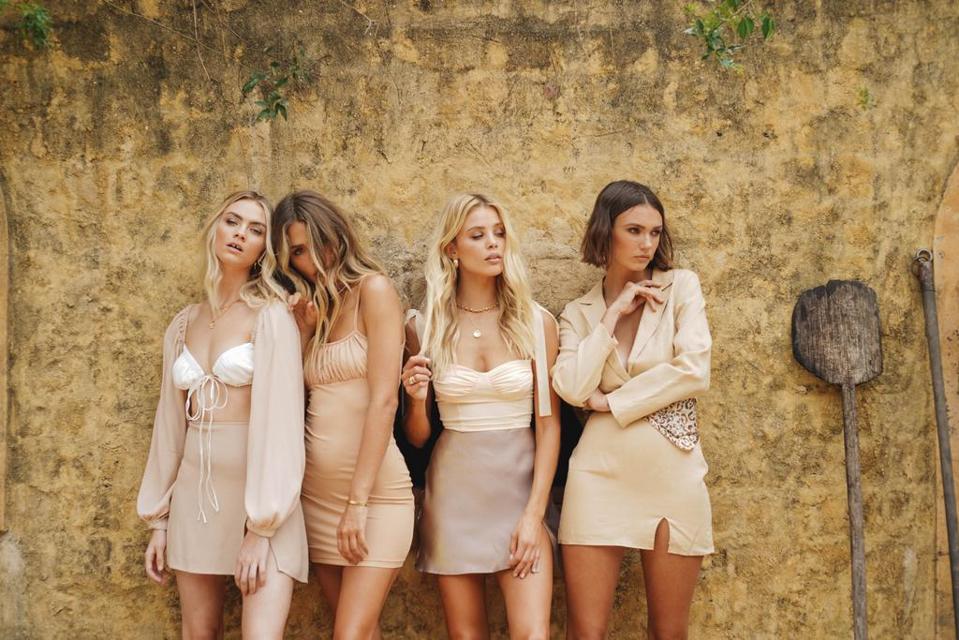 Australian fashion retailers like Verge Girl and Showpo are seeing rapid growth within their ... [+] Verge GirlOutside the United States, retail is booming. In fact, international retail sales are projected to reach $4.8 trillion USD by as soon as 2021. But one country in particular is experiencing rapid retail growth and expansion within the apparel industry: Australia. Currently the 10th largest ecommerce market in the world based on its $25.2 billion (USD) market share projected for 2021, Australia's online retailers are seeing major growth: Within the fashion industry alone, it's predicted Australian online fashion retailers will see a 9.7% uptick in revenue this year. Why is that? David Whitcroft, CFO at Full Stack Finance, says that Australian brands have an advantage in that they have to think internationally from inception (as they're launching within a small market.) If they want to effectively scale up, they'll have to connect with international shoppers outside of the country. But that's not all. Whitcroft also explained that Australia has higher input costs (like higher wages), which forces brands to be lean and efficient. Add to this the country's geographic location and counter-seasonality (which puts it ahead of seasons in northern hemisphere countries) and the fact that demographically and traveler-wise it's a melting pot of Asia, Europe, and the US—and you have a handful of competitive advantages. Bonus: There's no language barrier for English-speaking shoppers. "Don't forget the legacy global surf brands that have come out of Australia, as well as high fashion brands like Zimmerman and Colette Dinnigan," Whitman said. "Australia has a huge cohort of professionals who understand how to launch and scale successful apparel brands." Australia-based fashion brand Verge Girl is one example of these retailers finding success. Effective team-scaling and remaining direct-to-consumer have been two key components to the 2,400% online sales growth they saw between 2013 and 2016, as well as an additional 100% increase every year since 2017. "This growth happened after we started investing more time and money into the online store and hired a team to help with execution and fulfillment," said Daniella Dionyssiou, Verge Girl's co-founder. "We moved into a larger warehouse space and gradually hired photographers, stylists, warehouse managers, an operations manager and a marketing team." Influencer marketing has also been a major focus for the brand. Until late 2019 influencer partnerships accounted for almost 100% of Verge Girl's marketing efforts—and they still maintain a team that focuses solely on this channel. In the past few months, however, they've also started to focus on boosting customer acquisition via Facebook and Instagram ads. Verge Girl has also kept a wide audience: Product was available to international online shoppers from the very beginning. That said, international sales have only recently become a major portion of the brand's revenue, now accounting for about 60% of the brand's total annual revenue. With growth on a steady include, the brand has no plans to introduce retail partnerships (despite multiple offers), and instead plans to stick with the direct-to-consumer approach. The reason: It allows them to focus on the consumer, to stay agile, and to maintain exclusive rights to their brand and product. 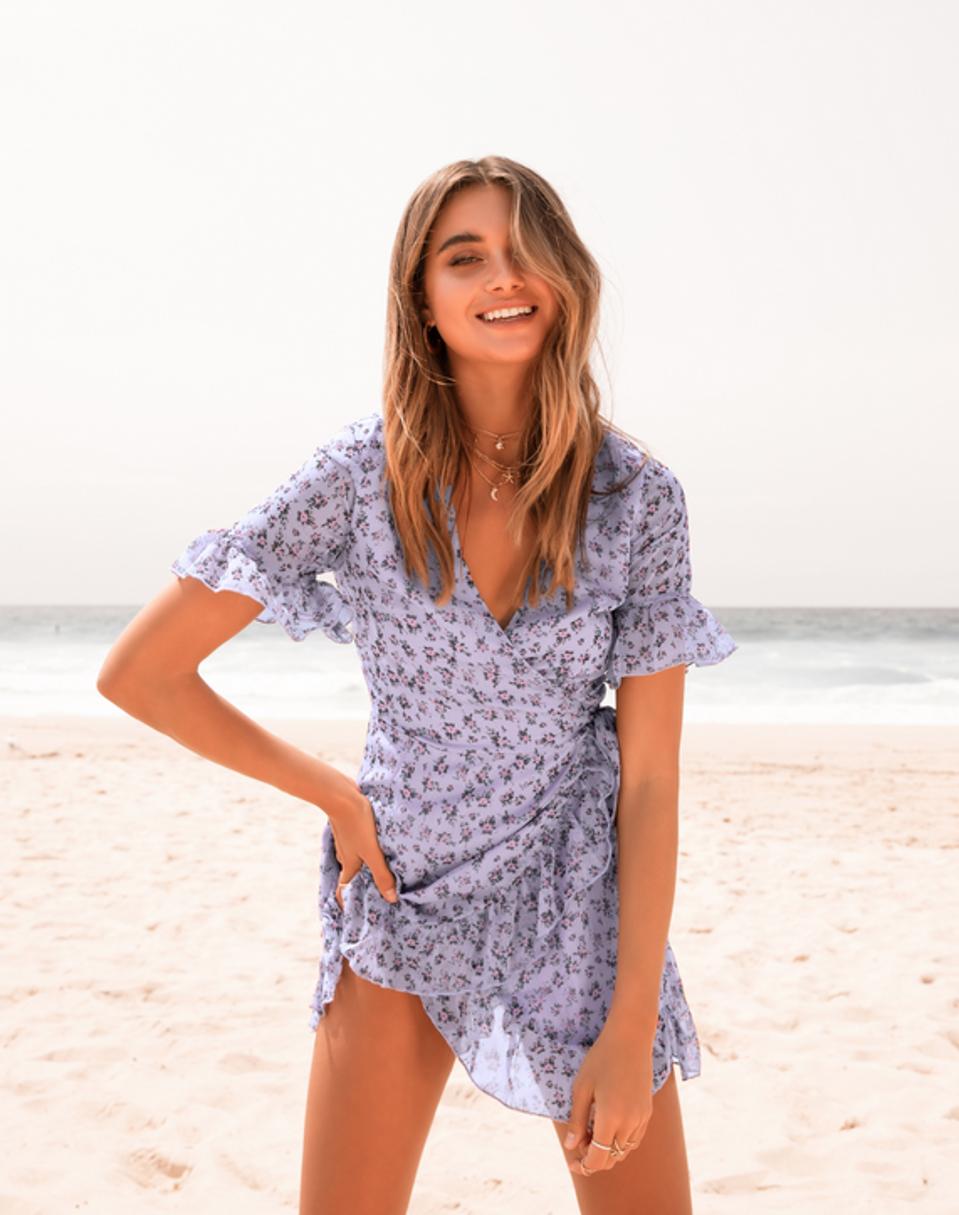 Showpo is seeing 50% year-over-year growth. ShowpoShowpo is another Australian fashion retailer witnessing rapid growth. They've seen 50% year-over-year growth within the US market in recent years—thanks to strategic growth efforts including a pop-up store in Los Angeles and structural changes to their stock and sourcing strategies. Jane Lu, Founder and CEO of Showpo, also feels that the Australian lifestyle resonates with US shoppers and has been a contributing factor to their popularity with US-based customers. Even with these success stories, Australia-based fashion retailers have their own unique set of challenges, however. As Edwin Jiang of Lean Luxe noted, geographic isolation can be a double-edged sword. Retailers echoed that sentiment. "As an Australian brand, our biggest challenge is probably the distance from Australia to the rest of the world," said Joy Fong, international sales director for cashmere label Banjo & Matilda. "Our team has to travel several times a year to New York, London, and Paris to truly understand the market and connect with our consumers—which requires an immense amount of resources." Despite this relative geographical isolation, apparel retailers in Australia continue tol push ahead to capture more international online sales. Brianna Bond, the Industry Relations and Programming Manager for IMG in Australia, said that she doesn't see this growth slowing down anytime soon—and she actually sees the fact that the country is far removed from the influences of major fashion scenes as a competitive advantage. "Australia is an incubator of cutting edge brands with a fresh design perspective," Bond said. "They also really know their customers. This is something that has always stuck with me when working with Australian designers."  |
| You are subscribed to email updates from "fashion" - Google News. To stop receiving these emails, you may unsubscribe now. | Email delivery powered by Google |
| Google, 1600 Amphitheatre Parkway, Mountain View, CA 94043, United States | |







0 Yorumlar